 ToolGrid AI
Tool Reviews
Perplexity vs ChatGPT for research: which should you use?
How the two popular AI tools differ for research tasks, and a practical way to use both while checking your sources.
By ToolGrid AI Editorial Team · Published
The core difference
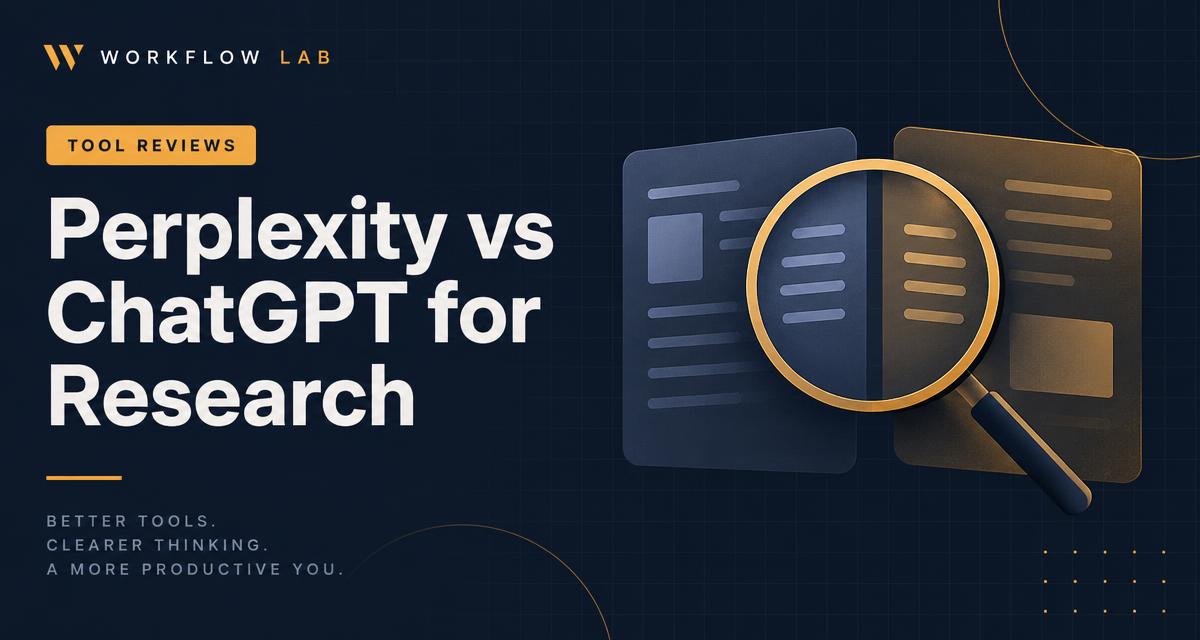
Perplexity is built around search: it looks things up on the web and shows numbered links to the sources behind each answer. ChatGPT is a general-purpose assistant that can also search the web, and is especially strong at explaining, drafting and working through problems in conversation.
When Perplexity tends to fit
Quick factual lookups, recent news and topics where you want to see sources straight away. The visible citations make it easy to jump to the original pages.
When ChatGPT tends to fit
Understanding a complex topic step by step, turning research into an outline or draft, analysing files you upload, and brainstorming. Its conversational depth is the main advantage.
A workflow that uses both
1. Use a search-focused tool to find and list credible sources. 2. Open and read the key sources yourself. 3. Use an assistant to help you organise what you learned into notes or a draft. 4. Re-check every important fact against the original source.
A warning that applies to both
AI tools can misread sources or invent details. A citation link does not guarantee the answer matches what the source says — click through and confirm.
Sources
Related articles

Tool Reviews
The best free AI writing tools in 2026 (and what each is good at)
A practical guide to free AI writing assistants for drafting, editing and proofreading — with honest notes on their limits.
· 2 min read
Tool Reviews
ChatGPT vs Claude vs Gemini: how to choose the right AI assistant
A fair, practical way to compare the three best-known AI assistants for your own work — without relying on hype.
· 2 min read